

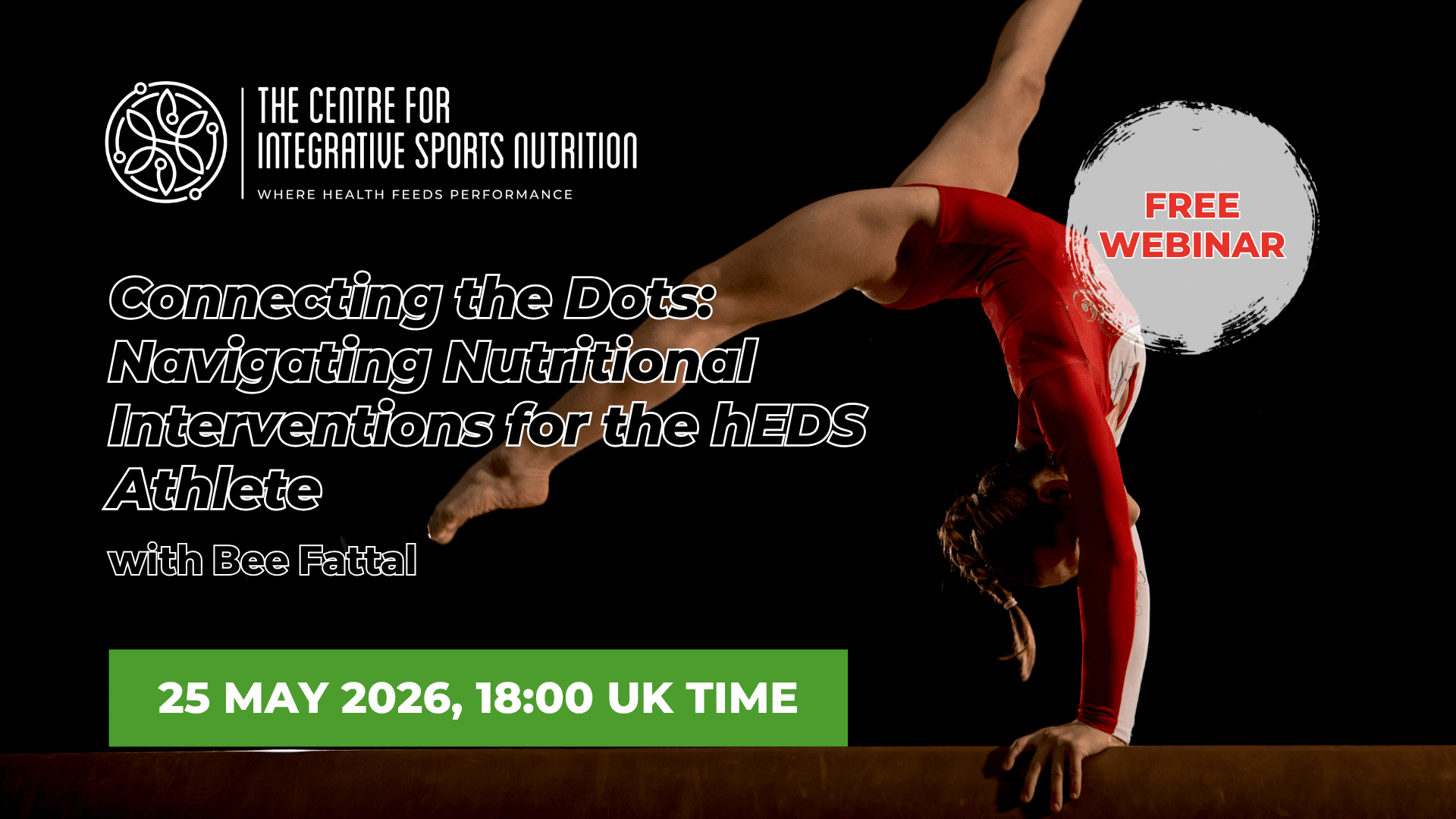
Hypermobile Ehlers-Danlos Syndrome (hEDS) presents a unique challenge for athletes and the practitioners who support them. A complex connective tissue disorder with wide-ranging systemic effects, hEDS touches crucial areas relevant to training, recovery, and performance, yet remains almost entirely absent from the sports nutrition research literature.
In this free one-hour webinar, Bee Fattal draws on adjacent evidence from connective tissue physiology, gut function, pain science, and micronutrient research to draw attention to the practical, personalised, and athlete-centred nutritional considerations for those living and competing with hEDS.
Key aims of this webinar include:
- What hEDS is and why it matters in sports nutrition practice
- Physiological considerations: connective tissue integrity, collagen structure and stability
- Common comorbidities: MCAS, POTS, and dysautonomia
- GI function and its implications for fuelling and nutrient absorption
- Micronutrient priorities and anti-inflammatory strategies
- Recovery strategies for the hypermobile athlete
- REDs and ARFID risk in the hEDS populations
Whether you are an athlete, coach, or practitioner, this webinar offers evidence-informed tools for a population that is underserved by research and often overlooked in clinical practice.
About Bee Fattal

Bee trained in osteopathic, manual therapy techniques and pain science at Skandinaviska Osteopathögskolan (Sweden), where the osteopathic principle of finding the health in the person shapes her coaching style; while her commitment to food accessibility and equity underpins her nutritional approach.
Working as a Pilates instructor and part-time baker, Bee sees the world through the lens of integrative movement and love of food. A former competitive roller derby player and coach of the German national team, she now competes in regional Swedish dog agility and spends her free time bouldering and hiking.
Living with an hEDS diagnosis herself, her interest in hypermobile athletes is as personal as it is professional.