


It is no longer acceptable to follow quantitative sports nutrition guidelines without an understanding of individuality. By combining new scientific discoveries with old traditional practices, Ian Craig believes that you can ultimately nourish your athletes.
During my time as editor of the Functional Sports Nutrition magazine, between 2010 and 2022, I witnessed an enormous change in the content of the pages. Not so much the feature articles because I had a hand in selecting the topics; although, even though they have become more functional and applied, they derive relevant information from wider allied fields, such as mind-body research and nutrigenomic science. But, it’s been the adverts and new product releases that have flourished in what they offer.
Looking through some 2010 editions, I saw a predominance of whey protein products produced by muscle brands, whereas a decade later we attracted a large number of natural product companies that would typically hold more comfortable positions in CAM (complimentary and alternative medicine) publications, plus a plethora of niche products that cover the requirements of health and sport. Additionally, the so-called muscle brands are also evolving, with more focus paid to ingredient quality, adding fewer artificial ingredients and, in some cases, providing vegan alternatives.
Given this backdrop of progression in the sports nutrition industry, when I look at conventional sports nutrition guidelines that are present in most sports nutrition publications, I am still frustrated whilst also extremely driven to make some changes. For example, the esteemed American College of Sports Medicine, which I looked to for guidance as an exercise physiology student many years ago, is reportedly the largest sports medicine and exercise science organisation in the world.
Looking at their most recent position statement on nutrition and athletic performance (1), the main messages are pretty much the same as I saw when I first studied sports nutrition in the early 1990s: caloric intake versus caloric expenditure for weight management, carbohydrate intake based on exercise volume, protein intake based on mode and volume of training, and careful limitations on saturated fat intake. In terms of micronutrients, in the past 20 years, they have added vitamin D and antioxidants to their list of important micronutrient nutrients, which initially only contained iron and calcium, but I wonder when we will see all the other essential vitamins and minerals, plus even phytonutrients, added to the list?
The 21st century of nutrition
All of these sports nutrition guidelines are completely relevant, and I believe that they should still be taught in universities, but as a quantitative starting point only. Many nutrition practitioners, unfortunately, tend to use them as a complete solution to an athlete’s health, which I feel holds their practice firmly back in the 20th century. So, let’s look at what else we should be considering as part of an athlete’s diet.
Although out of context for sports nutrition, we have witnessed some pretty serious challenges to general nutrition paradigms since the turn of this century. If we play a word association game, what is the first thing that comes to mind when I say ‘Atkins’? Is it ‘fat’ or ‘carbs’ or ‘protein’, is it a positive feeling or a negative one, and do you think we’ve learned anything from it? At a time when carb was king, the Atkins revolution swept through North America, Europe and much of the Westernised world. It was a low-carb, high-fat theory that really flew in the face of common convention at the time and left most dieticians shaking with anger.
The notion that consuming large quantities of fat and restricting carbohydrate intake, at least in the beginning, can actually help you to lose weight was an extreme one and something that many people refused to believe. But, the proof is always in the pudding, and many people who had been struggling with the prevailing dietetic norms lost a lot of weight by trading in the bread for bacon. A flurry of scientific studies followed, along with a decade of off-shoots, and many new lessons have since been learned. To cut a long story short, some people’s health improved remarkably by dumping the carbs, whereas others struggled with energy and important health parameters. We’re now overall seeing more moderate (balanced) approaches to macro-nutrition, although we remain in a highly experimental time in nutritional history; with some athletes following strict vegan lifestyles, and others pursuing ketogenic ideologies.
Within sports nutrition research, shadows of the high-fat, low-carb paradigm have appeared, but pretty much always in extreme measures, and in most cases, research subjects haven’t fared well when compared to high-carb scenarios, meaning that nothing much has been learned. A good example is a 2006 study (2) that I often use to demonstrate extremes in nutritional science. On two occasions, eight well-trained subjects were fed a particular diet for 7 days, followed by a 1-day carbohydrate load and a 100km cycling time trial. On one occasion, the diet was very high-carb (68 per cent of calories), and on the other occasion, the diet was very high-fat (68 per cent of calories).
Six out of the eight subjects fared better on the high-carb diet compared to two subjects who fared better on the high-fat diet; statistically, there was no difference in average 100km times, although the high-carb scenario was better for sprinting performance. The authors of the study concluded in favour of the high-carb approach. But what about the two subjects who actually experienced improved performance by getting tucked into the cream container? If they follow standard sports nutrition guidelines, they will always be underperforming, and this is, therefore, an example of the limitations of science, or at least an indication that the outcome of a study depends on which researcher’s eyes are upon it. Interestingly, research from the same department at the University of Cape Town a year earlier suggested that the exercise capacity and metabolic response during endurance exercise after a low carbohydrate diet was ‘highly variable between individuals’ (3).
Limitations of science in sports nutrition
Standard sports nutrition science is always looking to understand Mr and Mrs Average. But who wants to be average? I certainly don’t, but looking back at my own running career, I believe now that I was selling myself well short of my performance targets by blindly following the nutrition convention.
Science only tells us what it has studied to date, which is only a fraction of what there is to know. My colleague, Pete Williams, gave a Sports Nutrition Live talk and wrote an article entitled ‘It’s okay not to know all the science’ (4) in 2014. He pointed out that many scientific ‘facts’ are only considered facts for a certain period of time before something else takes its place. It was also noted that much of what we do and say is based on outdated science. He said, “If we read two studies per day out of the six million articles published each year, in one year, we would fall 82 centuries behind in our reading.”
Additionally, a lot of science is ignored by the writers of guidelines because it doesn’t resonate with the old-school researchers who cling to their personal theories – there is an enormous amount of research knowledge online that will never reach our trusted textbooks. For example, Professor Timothy Noakes, known and respected by many exercise physiologists worldwide, turned his prior theories of nutrition upside down and plumped for the high-fat, low-carb approach, as demonstrated by his book The Real Meal Revolution (5); this is in preference to a whole career of conventional high-carb thinking. He caused quite a stir in his native South Africa, but because most of his peers thought he’d gone slightly mad, his beliefs are unlikely to influence the likes of ACSM – in the short run at least.
But Noakes, and most other scientists, are doing what scientists have to do. Sally Fallon, author of Nourishing Traditions (6), sums up the challenges of science eloquently: “It is a motif of science to reduce complex phenomena to simple integral units.” In order for well-controlled research studies to be conducted, scientists have factor out the complexities of nutrition and humanness, which can unfortunately result in these polarised viewpoints that we often read about in science.
But what if the outcome of nutritional science was to identify you not as Mr or Mrs Average, but as your unique self? Thanks to the rapidly evolving science of nutrigenomics, we can, to a certain extent, do just that. Modern genetics tests exist that can give you some key insights into how you metabolise fats and carbohydrates, how you detoxify certain foods, hormones and toxins, and it helps you to understand your unique requirements for certain micronutrients such as folic acid, vitamin D and essential fatty acids.
Genetic research still has a long way to go before it can provide you with an extremely detailed and dependable analysis of self, which is why some scientists try and knock it down so strongly, but when combined with the skills of an experienced and intuitive nutrition practitioner, they can be powerful tools in the quest for an individualised course of action. With some genetic guidance, combined with a bit of trial and error for refinement, the carb versus fats balance is an easy one to unravel for an individual – which throws 20 years of conventional standardised macronutrient thinking into question. Research is progressing at an incredible pace, and it is important for us to keep up. Athletes, especially those doing large volumes of training and who require large volumes of food, require quite specialised understanding and treatment.
Beyond macronutrients in sports nutrition
As is commonly the case in sports nutrition texts, all I’ve pretty much talked about so far is macronutrients. Our macros are a necessary part of nutrition, but they only provide a very surface understanding of this great subject. In times gone by, measuring the gram values of protein, carbs, and fats was of little importance. What was paramount was the sourcing of food and the nutrient density of the food.

For example, even today, you wouldn’t go to a local organic farmer’s market worrying about the number of carbs in the apple you pick up. Instead, the focus would be on ripeness and freshness, which in turn would tell you about the likely taste of the apple, plus the nutrients that you would derive from that piece of produce. So, if we trade in some of our quantitative focus for a sense of quality when it comes to choosing food, I believe wholeheartedly that we can nourish our athletes to a much higher standard than before.
It goes back to the old question of whether you would put cheap petrol in a Ferrari. Our athletes stand to gain even more from quality fuel than a car does because they are a collection of living, breathing cells requiring nutrients in extremely sophisticated ways. Additionally, food is not just a fuel – carbs and fats can be viewed that way, but the actual food that carries these macros contains other elements. For example, whole grains are high in B vitamins, which are vital co-factors in the biochemistry of substrate metabolism. A food might provide carbohydrates, but without sufficient micronutrients (or co-factors), ATP will not be produced – this is just a simple example of the importance of food in its whole and non-refined form.
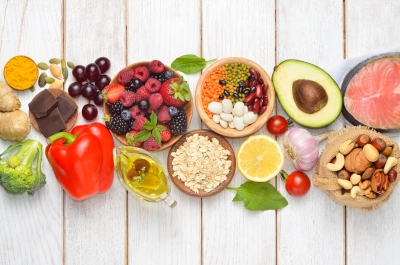
And what about phytonutrients? Antioxidants have been identified in all sorts of colourful fruits and vegetables and herbs – e.g. green tea, red, black and blueberries, tomatoes, carrots, and all sorts of extravagant ingredients such as goji berries, baobab, lucuma, and cacao (the raw form of cocoa). Anti-inflammatory spices, which can be useful in recovery from hard exercise and injury and illness, include the likes of ginger and turmeric, which are used in traditional ethnic cooking. But how often do we open a sports nutrition textbook to find an emphasis on colourful, local, organic and ultimately nourishing foods, herbs and spices? Often, by following quantitative guidelines, we’re feeding our athletes bland foods of varying shades of whites and browns, often with commercial interests, such as heavily refined breakfast cereals.
Conclusions
It is time for us exercise professionals, who are working in the sports nutrition space, to step up to the plate and move on from conventional thinking. Let’s stop fussing over minuscule changes in sports nutrition guidelines, which, in fact, only cover surface nutritional requirements. Instead, let’s treat each athlete as genetically unique and accordingly shape their macronutrient balances, maximise their micronutrient density from wholesome foods, and understand that their health needs may not be shared by his or her athletic (or research) peers. This means that every one of our athletes is a research outlier in one way or another and should be dealt with as such.
- American College of Sports Medicine, Academy of Nutrition and Dietetics & Dieticians of Canada (2016). Nutrition and athletic performance – Joint Position Statement. Med Sci Sports Exerc.48(3):543-568.
- Havemann L et al (2006). Fat adaptation followed by carbohydrate loading compromised high-intensity sprint performance. J Appl Physiol.100:194-202.
- Claassen A et al (2005). Variability in exercise capacity and metabolic response during endurance exercise after a low carbohydrate diet. Int J Sport Nutr Exerc Metab.15(2):97-116.
- Williams P (2014). It’s okay to not know all the science. Target Publishing, UK. Functional Sports Nutrition. July/Aug 2014. pp20-22.
- Noakes et al (2013). The Real Meal Revolution. Quivertree Publications.
- Fallon S (2003). Nourishing Traditions. 2nd Edition. Washington, D.C.: New Trends Publishing.
 Ian Craig MSc DipCNE BANT Fellow INLPTA is the founder of the Centre for Integrative Sports Nutrition (CISN) and course leader of their online postgraduate level courses. He is an experienced exercise physiologist, nutritional therapist, NLP practitioner, and an endurance coach. Clinically, within a team dynamic, Ian works with sporting individuals and complex health cases at his Scottish home, and online. Additionally, Ian co-authored the Struik Lifestyle book Wholesome Nutrition with his natural chef wife Rachel Jesson, and is currently co-writing the Textbook of Integrative Sports Nutrition, to be published in 2025.
Twitter: @ian_nutrition