

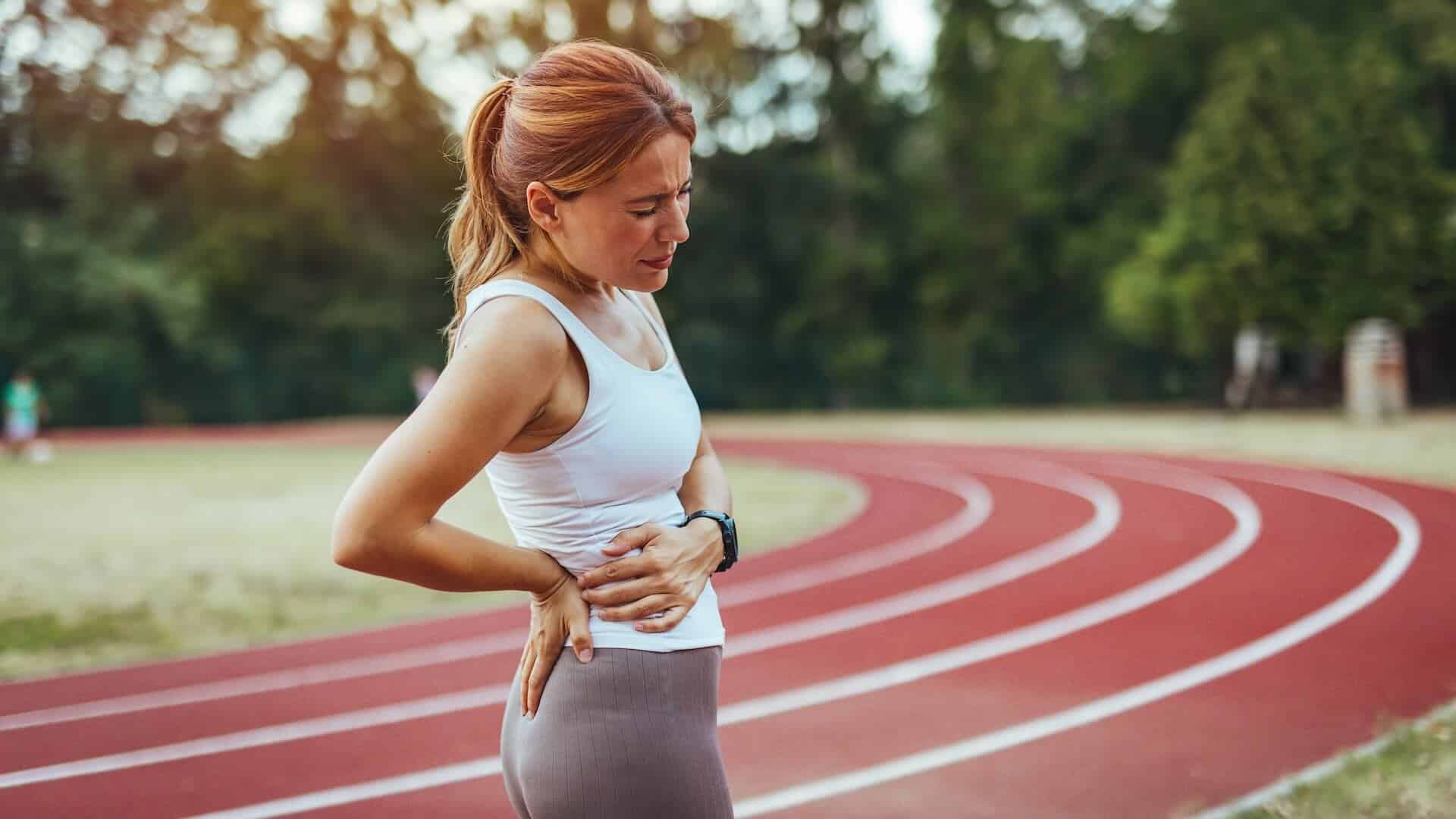
Nutrition can form a significant part of a musculoskeletal injury rehabilitation protocol, especially when other aspects of health are also out of balance. Functional medicine practitioner, Dr Ruth Wilde, showcases the use of nutritional management in this case of a nutritionally depleted former distance runner.
She fasted from 8 p.m. until around 11 a.m. each day, preferring to drank caffeinated coffee during this time, plus she walked or cycled for up to two hours prior to eating her first meal.”

Megan was a 65 year old retired teacher and former distance road runner and horse rider, who consulted with me for significant musculoskeletal injury problems, including chronic lower back pain and Achilles tendonitis. She had the goals of reducing musculoskeletal pain to permit increased levels of activity, and to support bone health, along with overall health optimisation for longevity.
Her most noticeable musculoskeletal injury history included an L4/5 disc prolapse ten years previously, around the time that she was transitioning through menopause. She had subsequently suffered several incapacitating flare-ups and had not run since, but was maintaining daily low-level cardiovascular activities of around two hours of walking and cycling, as well as multiple house and garden chores. Over the past ten years she’d noticed a significant loss of muscle mass body-wide, an increase in anxiety, decrease in self esteem, plus her sleep was of poor quality.
At the time of our first consultation, Megan had been following a specific eating plan for about two years: her diet was very high in dairy fat and low in protein and complex carbohydrates. Additionally, she drank around 10 units of alcohol per week and had a high coffee intake throughout the day. She fasted from 8 p.m. until around 11 a.m. each day, preferring to drank caffeinated coffee during this time, plus she walked or cycled for up to two hours prior to eating her first meal.
I asked her to undertake the relatively crude, but useful, baking soda test (or ‘burp test’) that uses a teaspoon of bicarbonate in water, taken on an empty stomach. This test produced no ‘burp’ symptoms after seven minutes, which pointed towards potential low stomach acid production. It is actually a common finding in patients who present with a chronic stress picture of any cause, irrespective of age, and is found particularly frequently in the athlete community.
ZRT Female Profile
A baseline blood panel, including the ZRT Female Profile was run. Key findings included:
- Neutrophils were slightly low, which can indicate a chronic infection or vitamin deficiency.
- Slightly low ferritin, which usually indicates low iron stores. Full iron studies were subsequently run, which confirmed this.
- Glucose and HbA1c were slightly higher than ideal, which likely indicated early insulin resistance due to cortisol dysregulation.
- Alkaline phosphatase was mid-range, and when low often indicates a need for more zinc.
- Triglyceride levels were at the low end of range, probably reflected her low-carb eating patterns.
- LDL was raised, as is so often the case when cortisol is dysregulated.
- Vitamin D was mid-range.
The most notable result from the ZRT hormone test that may have related to her musculoskeletal injury profile was the inverse adrenal pattern: Salivary cortisol was low in the morning, rising to a normal level at noon and continuing to rise to a high level in the evening, but dropping back again to a normal level at night. This erratic pattern suggested poor blood sugar regulation (dysglycemia) and/or chronic adrenal stressors. Her thyroid function was also borderline low and the reproductive hormones were, unsurprisingly, within post-menopausal ranges.
GI Map stool test
A GI Map stool test was also run for Megan. Overall, the gut health and immune defence markers indicated robust gastrointestinal function, but there was some microbial imbalance. This pattern probably resulted from a combination of long term stressors, low stomach acid levels, and also a longterm high-fat low-carb diet. The presence of anti-gliadin antibodies implied at least a low level sensitivity to gluten so I recommended to Megan that she take gluten out of her diet for three months to help the immune system to settle. As there is significant cross-reactivity with gluten and dairy proteins, removing dairy at the same time was suggested.
We also found a number of microorganisms out of balance in Megan’s GI Map test, including the Giardia parasite, Helicobacter pylori bacteria and a number of bacteria that could potentially be linked with autoimmune conditions. If these microbial imbalances were present in isolation, without associated gut symptoms, they could probably be left to resolve over time with a change in nutrition and other lifestyle areas. However, given all of Megan’s symptoms and history of gut and musculoskeletal injury problems, I felt that these results merited a three to six month anti-microbial herbal gut treatment protocol, which should help to reduce systemic inflammation.
Nutrition plan of action
Megan enjoyed cooking and was happy to receive more basic guidance from me rather than a prescriptive meal plan. She asked instead for lists of foods to combine in her cooking; she had time flexibility and thankfully found cooking to be a pleasure rather than a chore.
I recommended to Megan that she combined at least one item from each of the following lists per meal or snack.
- Vegetables: include as wide a variety as possible, especially green leafy vegetables. For optimum blood sugar stability, start your meal with vegetables.
- Fruits: eat these at the end of the meal; berries, apples, oranges and bananas are lowest in sugar compared to tropical fruits, which are higher.
- Pulses: can be included in any meal for fibre and a source of carbohydrate and protein.
- Cinnamon: sprinkle liberally on many meals to support blood sugar stability.
- Turmeric: potent anti-inflammatory; include daily with meals.
- Hydration: include at least two litres of clear fluid daily and add collagen with electrolytes.
- Alcohol: Please avoid.
Note on mercury: tuna and swordfish are both high mercury fish, so limit these and rather opt for the SMASH fish (sardines, mackerel, anchovy, salmon and herring).
Cinnamon

There is evidence that cinnamon can improve insulin sensitivity and glycaemic control (Magistrelli and Chezem, 2012), primarily by reducing the insulinemic response required to modulate blood glucose concentrations (Wang et al., 2021). The majority of evidence derives from studies of diabetic patients, with the current consensus that a one to six gram dose of cinnamon powder is a low cost and easily accessible auxiliary agent in type-2 diabetes treatment (Santos and Silva, 2018), whereas the evidence for a beneficial effect in non-clinical populations is not yet clear (Wang et al., 2021). In addition to this potential blood sugar stabilising effect, the positive impacts of cinnamon in reducing gut inflammation, enhancing gut intestinal integrity and supporting the gut microbiome are now coming to light (Li et al., 2020; Qi et al., 2021).
Curcumin
 Turmeric contains high concentrations of the natural polyphenol curcumin, which has potent anti-inflammatory and antioxidant properties (Basnet and Skalko-Basnet, 2011), and has been shown to reduce muscle soreness after exercise (Clayton et al., 2023). Turmeric can relieve musculoskeletal injury pain and stiffness, potentially accelerating the return to exercise. Current European Food Safety Authority recommendations suggest that curcumin can be consumed up to 3 mg.kg.day-1 (EFSA, 2014). However, curcumin is poorly absorbed and rapidly metabolised (Anand et al., 2007), making the precise dosage difficult to prescribe. Many curcumin supplements are formulated with an adjuvant such as piperine to enhance bioavailability (Shoba et al., 1998), although when given alone and remaining within the gut lumen, curcumin has the additional benefits of positive modulation of the gut microbiome (Scazzocchio et al., 2020), so the practitioner should take care over the choice of formulation depending on the main intended effect.
- Anand P et al. (2007). Bioavailability of curcumin: problems and promises. Mol Pharm. 4(6):807-818.
- Basnet P and Skalko-Basnet N (2011). Curcumin: an anti-inflammatory molecule from a curry spice on the path to cancer treatment. Molecules. 16(6):4567-4598.
- Clayton DJ et al. (2023). Turmeric supplementation improves markers of recovery in elite male footballers: a pilot study. Front Nutr. 10:1175622.
- EFSA (2014). Refined exposure assessment for curcumin (E 100). Available from: https://www.efsa.europa.eu/en/efsajournal/pub/3876
- Li AL et al. (2020). Effect of cinnamon essential oil on gut microbiota in the mouse model of dextran sodium sulfate-induced colitis. Microbiol Immunol. 64(1):23-32.
- Magistrelli A and Chezem JC (2012). Effect of ground cinnamon on postprandial blood glucose concentration in normal-weight and obese adults. J Acad Nutr Diet. 112(11):1806-1809.
- Qi L et al. (2021). Cinnamaldehyde promotes the intestinal barrier functions and reshapes gut microbiome in early weaned rats. Front Nutr. 8:748503.
- Santos HO and da Silva GAR (2018). To what extent does cinnamon administration improve the glycemic and lipid profiles? Clin Nutr ESPEN. 27:1-9.
- Scazzocchio B et al. (2020). Interaction between gut microbiota and curcumin: A new key of understanding for the health effects of curcumin. Nutrients. 12(9):2499.
- Shoba G et al. (1998). Influence of piperine on the pharmacokinetics of curcumin in animals and human volunteers. Planta Med. 64(4):353-356.
- Wang J et al. (2021). Acute Effects of Cinnamon Spice on Post-prandial Glucose and Insulin in Normal Weight and Overweight/Obese Subjects: A Pilot Study. Front Nutr. 7:619782.
 Dr Ruth Wilde MB BCh MRCEM (AFMCP 2017)
is an IFM certified functional medicine doctor who specialises in health optimisation and longevity medicine, working largely with the athlete community. Her clinical training is broad and extensive, including emergency medicine, general practice, rehabilitation medicine and hormone optimisation therapies.
Ruth is a committed weight lifter and runner, who walks her talk when it comes to the lifestyle foundations of health. She is passionate about helping others to achieve their health and training goals and has a special interest in supporting athletes during their recovery from injury.
Website: www.drruthwilde.com